November 1, 2026, 1:30 pm - 5:00 pm:
- SC01: Veridical Data Science in the Age of AI (Room 12)
- SC02: Beyond the ATE (Room 13)
November 2, 2026, 1:30 pm - 5:00 pm:
- SC03: Statistical Foundations of Transfer Learning (Room 12)
- SC05: Optimization for Statistics (Room 13)
Veridical Data Science in the Age of AI
Course Description:
Data science underpins modern AI and many advances in healthcare, yet human judgment permeates every stage of the data science life cycle. These judgment calls introduce hidden uncertainties that go well beyond sampling variability and drive many of the risks associated with AI.
We introduce veridical data science, grounded in three fundamental principles—Predictability, Computability, and Stability (PCS)—to make such uncertainties explicit and assessable and to aggregate reality-checked algorithms for better results. The PCS framework unifies and extends best practices in statistics and machine learning and is illustrated through case studies including identifying causal drivers of heart disease and brain regions, reducing cost of prostate cancer detection, and improving uncertainty quantification beyond standard conformal prediction.
We then cover 2 software packages and best practices for implementing PCS principles in practice. We start with vflow, a Python package that makes it easy to implement and evaluate the effect of judgment calls on a data-science pipeline. We demonstrate its usage on popular real-world datasets from the BLADE benchmark. Then, we will introduce MERITS that a veridical simulation study should satisfy. We accompany this with simChef, an R package for cooking up reproducible, high-quality simulations in a flexible, efficient, and low-code manner.
Instructors: Bin Yu, Tiffany Tang, and Chandan Singh
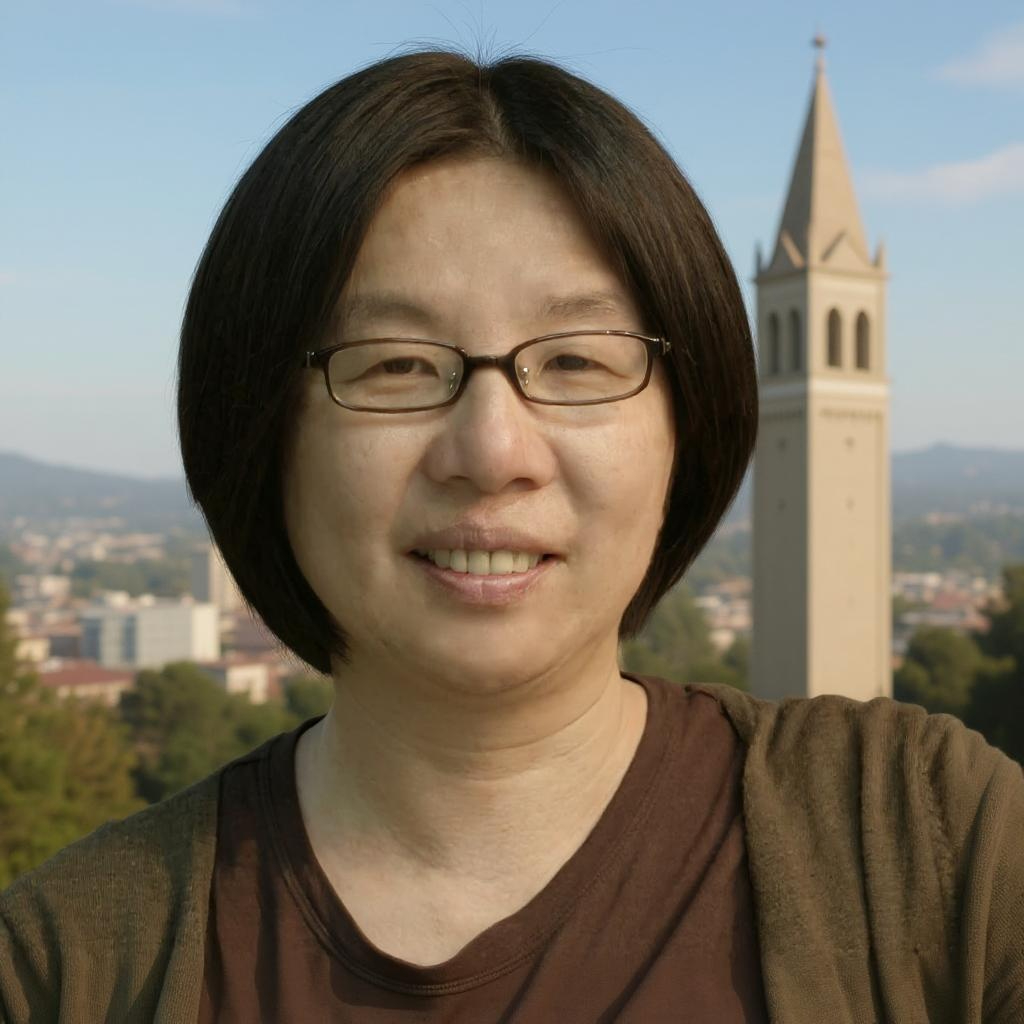 Bin
Yu is CDSS Chancellor's Distinguished Professor in
Statistics, EECS, Center for Computational Biology, and Senior Advisor
at the Simons Institute for the Theory of Computing, all at UC
Berkeley. Her research focuses on the practice and theory of
statistical machine learning, veridical data science, responsible and
safe AI, and solving interdisciplinary data problems in neuroscience,
genomics, and precision medicine. She and her team have developed
algorithms such as iterative random forests (iRF), stability-driven
NMF, adaptive wavelet distillation (AWD), Contextual Decomposition for
Transformers (CD-T), SPEX and ProxySPEX for interpreting deep learning
models, especially for compositional interpretability.
Bin
Yu is CDSS Chancellor's Distinguished Professor in
Statistics, EECS, Center for Computational Biology, and Senior Advisor
at the Simons Institute for the Theory of Computing, all at UC
Berkeley. Her research focuses on the practice and theory of
statistical machine learning, veridical data science, responsible and
safe AI, and solving interdisciplinary data problems in neuroscience,
genomics, and precision medicine. She and her team have developed
algorithms such as iterative random forests (iRF), stability-driven
NMF, adaptive wavelet distillation (AWD), Contextual Decomposition for
Transformers (CD-T), SPEX and ProxySPEX for interpreting deep learning
models, especially for compositional interpretability.
She is a member of the National Academy of Sciences and of the American Academy of Arts and Sciences. She was a Guggenheim Fellow, President of Institute of Mathematical Statistics (IMS), and delivered the Tukey Lecture of the Bernoulli Society, the Breiman Lecture at NeurIPS, the IMS Rietz Lecture, and the Wald Memorial Lectures (the highest honor of IMS), and Distinguished Achievement Award and Lecture (formerly Fisher Lecture) of COPSS (Committee of Presidents of Statistical Societies). She holds an Honorary Doctorate from The University of Lausanne. She is on the Editorial Board of Proceedings of National Academy of Science (PNAS) and a co-editor of the Harvard Data Science Review (HDSR).
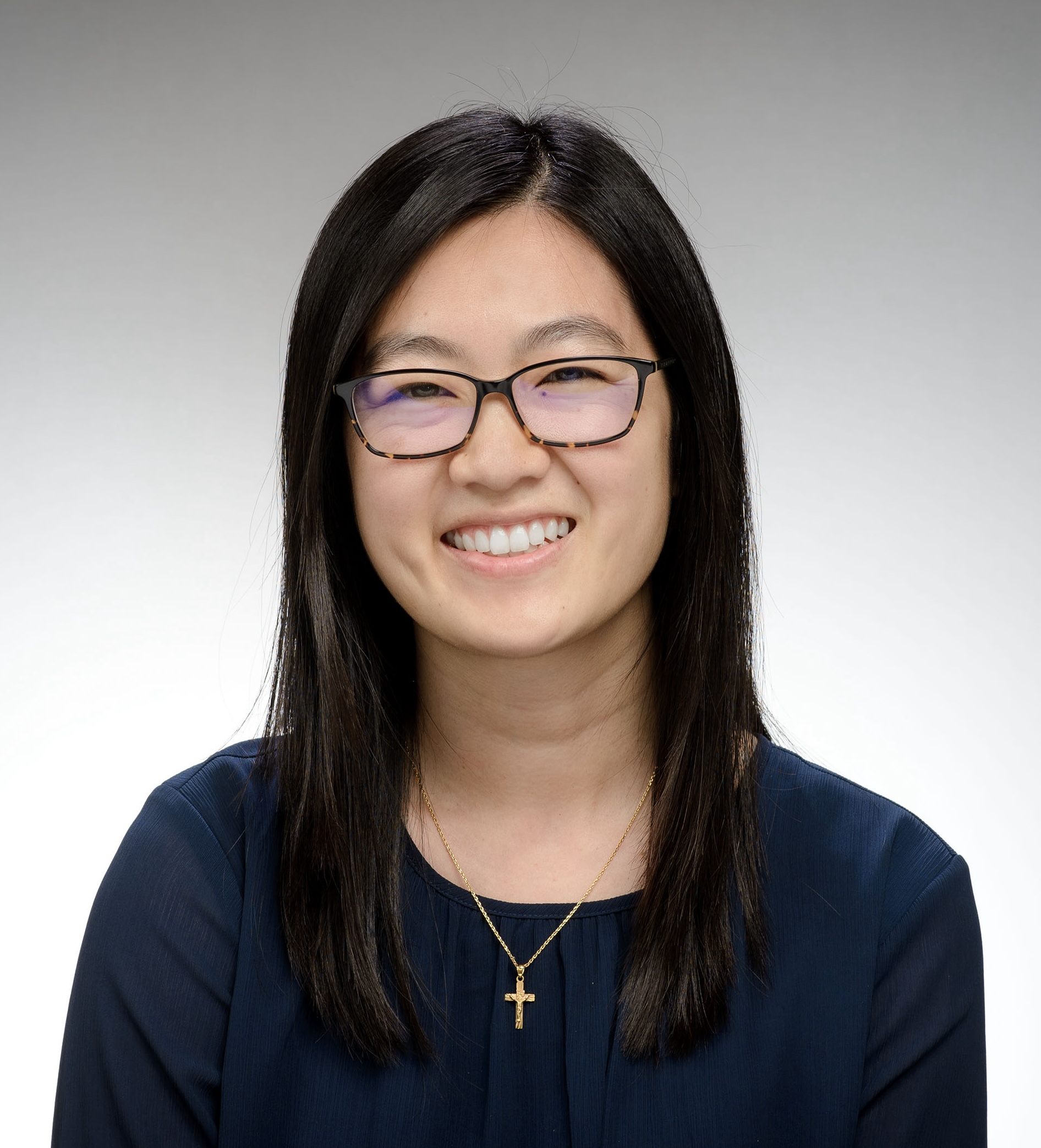 Tiffany
Tang is a Clare Boothe Luce Assistant Professor at the
University of Notre Dame in the Department of Applied and
Computational Mathematics and Statistics. Her research interests
broadly range from interpretable machine learning to responsible
applications of AI in healthcare to open-source software development.
Previously, she completed her PhD in statistics at UC Berkeley,
advised by Bin Yu, and a postdoctoral fellowship in the University of
Michigan Statistics department with Liza Levina and Ji Zhu.
Tiffany
Tang is a Clare Boothe Luce Assistant Professor at the
University of Notre Dame in the Department of Applied and
Computational Mathematics and Statistics. Her research interests
broadly range from interpretable machine learning to responsible
applications of AI in healthcare to open-source software development.
Previously, she completed her PhD in statistics at UC Berkeley,
advised by Bin Yu, and a postdoctoral fellowship in the University of
Michigan Statistics department with Liza Levina and Ji Zhu.
 Chandan
Singh is a researcher in the Deep learning group at MSR,
working on interpretability and LLMs, with the broad goal of improving
science and medicine using data. Recently, he has focused on how to
reliably use LLMs to extract new insights in clinical data and
language fMRI. Separately, he has also worked on developing highly
accurate transparent models, such as improving linear models and
decision trees. He received his PhD from UC Berkeley in 2022 advised
by Professor Bin Yu.
Chandan
Singh is a researcher in the Deep learning group at MSR,
working on interpretability and LLMs, with the broad goal of improving
science and medicine using data. Recently, he has focused on how to
reliably use LLMs to extract new insights in clinical data and
language fMRI. Separately, he has also worked on developing highly
accurate transparent models, such as improving linear models and
decision trees. He received his PhD from UC Berkeley in 2022 advised
by Professor Bin Yu.
Beyond the ATE
Course Description:
In this workshop, we present methods to define and estimate the causal effects of categorical, continuous, and multivariate exposures. The methods are based on a generalization of the static and dynamic interventions that may be familiar to some of you. This generalization has been recently called modified treatment policies (MTPs). MTPs are hypothetical interventions where the post-intervention exposure is defined as a modification of the natural value of the exposure that can also depend on the unit’s history. This short course will introduce the lmtp R package for estimating the causal effects of these general estimands in both point-treatment and longitudinal studies. We will discuss identification of MTPs, estimation with a targeted minimum-loss based estimator and a sequentially doubly-robust estimator, and provide guidance on estimator choice and software usage.
Instructors: Iván Díaz, Kara Rudolf, and Nick Williams
 Iván
Díaz is an Associate Professor of Biostatistics at New
York University Grossman School of Medicine. His research focuses on
the development of non-parametric statistical methods for causal
inference from observational and randomized studies with complex
datasets, using machine learning. This includes but is not limited to
mediation analysis, methods for continuous exposures, longitudinal
data including survival analysis, and efficiency guarantees with
covariate adjustment in randomized trials. He also works applying
these methods to healthcare research, including in neurology, critical
care, opioid use research, and other areas.
Iván
Díaz is an Associate Professor of Biostatistics at New
York University Grossman School of Medicine. His research focuses on
the development of non-parametric statistical methods for causal
inference from observational and randomized studies with complex
datasets, using machine learning. This includes but is not limited to
mediation analysis, methods for continuous exposures, longitudinal
data including survival analysis, and efficiency guarantees with
covariate adjustment in randomized trials. He also works applying
these methods to healthcare research, including in neurology, critical
care, opioid use research, and other areas.
 Kara
Rudolph is an Associate Professor of Epidemiology at
Columbia University, Mailman School of Public Health. Her research
interests are in developing and applying causal inference methods to
inform the prevention and treatment of opioid use disorder, the
prevention of violence, and understanding health effects of the
environment. She is interested in approaches for transportability and
data fusion, mediation, effect heterogeneity, and complex
exposures.
Kara
Rudolph is an Associate Professor of Epidemiology at
Columbia University, Mailman School of Public Health. Her research
interests are in developing and applying causal inference methods to
inform the prevention and treatment of opioid use disorder, the
prevention of violence, and understanding health effects of the
environment. She is interested in approaches for transportability and
data fusion, mediation, effect heterogeneity, and complex
exposures.

Statistical Foundations of Transfer Learning
Course Description:
This half-day short course offers a selective, statistics-first introduction to the foundations of transfer learning and closely related multi-task learning ideas. The central question is how distribution shift between source and target populations affects generalization, and how explicit statistical assumptions make principled knowledge transfer possible.
The course covers three core threads: domain adaptation bounds expressed through divergence measures between source and target distributions; covariate shift and density-ratio based reweighting for valid risk estimation and estimator construction; and posterior drift addressed via biased regularization as a route to "safe transfer" that guards against negative transfer. Throughout, the emphasis is on precise problem formulations, the key theoretical results that follow from them, and the intuition for when transfer helps, when it hurts, and why.
The format is lecture-based, with guided derivations, brief conceptual check-ins, and short numerical illustrations accompanying each thread to make the theoretical takeaways concrete. Participants will leave with a unified perspective on divergence-based analysis, covariate shift correction, and biased regularization—one that can inform both applied methodological choices and further theoretical research.
Prerequisites:
Participants should have a working knowledge of mathematical statistics at the level of a first-year Ph.D. course, including probability, expectation and concentration inequalities, and basic asymptotics. Familiarity with standard supervised learning (regression and classification, empirical risk minimization, bias–variance trade-off) and with regularized estimators such as ridge and lasso will be assumed. Comfort with linear algebra and multivariable calculus is expected. No coding background is required: the course is theoretical and methodological in focus, and some numerical illustrations may be shown by the instructor if time permits.
Instructor: Yang Feng
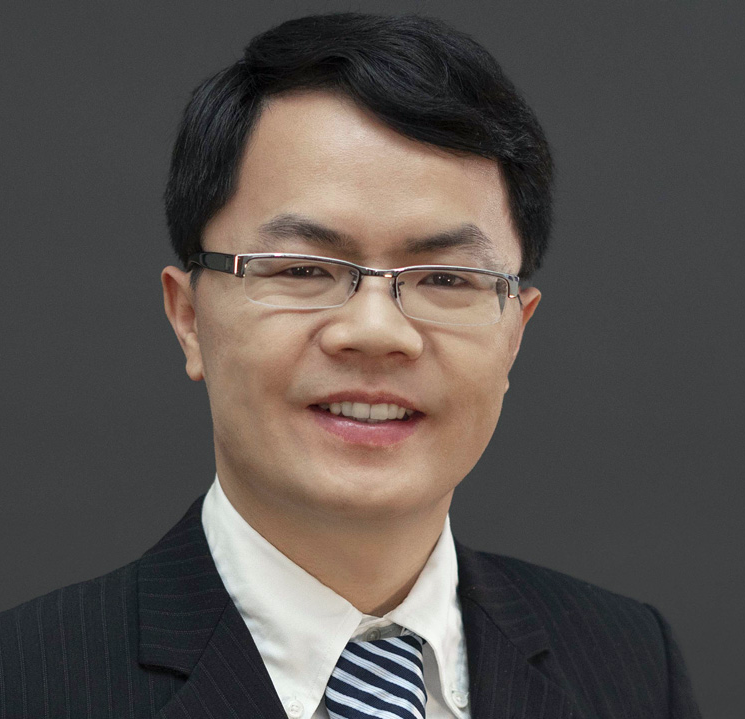 Yang
Feng is a Professor of Biostatistics in the School of
Global Public Health at New York University, where he is also
affiliated with the Center for Data Science. He received his Ph.D. in
Operations Research from Princeton University in 2010.
Yang
Feng is a Professor of Biostatistics in the School of
Global Public Health at New York University, where he is also
affiliated with the Center for Data Science. He received his Ph.D. in
Operations Research from Princeton University in 2010.
Dr. Feng’s research focuses on the theoretical and methodological foundations of machine learning, high-dimensional statistics, network models, and nonparametric statistics. His work addresses critical applications in Alzheimer’s disease prognosis, cancer subtype classification, genomics, electronic health records, and biomedical imaging, with the goal of enabling more accurate risk assessment and clinical decision-making. He has published over 70 peer-reviewed papers in leading journals across statistics, machine learning, econometrics, and medicine. His research has been supported by grants from the National Institutes of Health (NIH) and the National Science Foundation (NSF), including the NSF CAREER Award.
Currently, Dr. Feng serves as the Review Editor for the Journal of the American Statistical Association (JASA) and The American Statistician (2026–2028). He also serves as an Associate Editor for several premier journals, including JASA Theory & Methods, the Journal of Business & Economic Statistics, the Journal of Computational & Graphical Statistics, and the Annals of Applied Statistics. He is a Fellow of the American Statistical Association (2022) and the Institute of Mathematical Statistics (2023), and has been an elected member of the International Statistical Institute since 2017.
Optimization for Statistics
Course Description:
Optimization lies at the heart of modern data science, offering scalable solutions for high-dimensional problems in statistics and machine/deep learning. The first part of the course will cover: (i) the fundamentals of gradient-based optimization and (ii) advanced optimization methods. These algorithms will be illustrated through applications in high-dimensional statistics and machine learning, including sparse regression, matrix completion, graphical models and feed-forward neural networks. The second part will explore key recent developments in optimization driven by challenges in machine and deep learning. It will briefly cover: (i) Federated and distributed learning, where decentralized optimization techniques enable efficient model training across multiple devices while preserving data privacy. (ii) Minimax optimization, a powerful framework for adversarial learning, robust statistics, and generative modeling. (iii) Bilevel optimization, which has gained prominence in the last 2-3 years for applications such as hyperparameter tuning, meta-learning, and reinforcement learning. The course will balance core concepts with sufficient technical depth, providing an accessible yet insightful perspective on the latest advances in optimization.
Instructor: George Michailidis
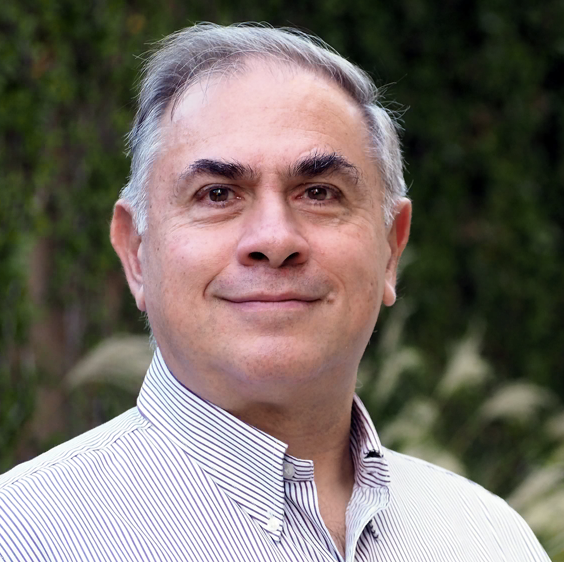 George
Michailidis is a Professor in the Department of
Statistics & Data Science at UCLA, where he joined the faculty in
2022. His academic career includes 17 years on the faculty in
Statistics and EECS at the University of Michigan, followed by roles
as a Professor of Statistics and Computer Science and the Founding
Director of the Informatics Institute at the University of Florida.
His research focuses on high-dimensional statistics for complex,
temporally dependent data; optimization for modern machine learning
(encompassing minimax, bilevel, and federated architectures); change
point analysis; and interpretable machine learning. Bridging theory
and practice, he regularly collaborates across engineering,
biomedicine, and finance to deploy his methods on large-scale
datasets. Alongside his standard teaching duties in optimization for
data science and machine learning, he has also delivered a
corresponding short course on multiple occasions.
George
Michailidis is a Professor in the Department of
Statistics & Data Science at UCLA, where he joined the faculty in
2022. His academic career includes 17 years on the faculty in
Statistics and EECS at the University of Michigan, followed by roles
as a Professor of Statistics and Computer Science and the Founding
Director of the Informatics Institute at the University of Florida.
His research focuses on high-dimensional statistics for complex,
temporally dependent data; optimization for modern machine learning
(encompassing minimax, bilevel, and federated architectures); change
point analysis; and interpretable machine learning. Bridging theory
and practice, he regularly collaborates across engineering,
biomedicine, and finance to deploy his methods on large-scale
datasets. Alongside his standard teaching duties in optimization for
data science and machine learning, he has also delivered a
corresponding short course on multiple occasions.