Keynote Speakers:
David Banks, Professor of the Practice of Statistics, Duke University
Keynote Presentation: The Future of Statistics
Abstract: The ground is changing under our feet. Our publication processes are antique. AI will affect our work in many ways, some of which are more predictable than others. Our educational curricula should be re-examined to better align our students with an emerging economy that favors data engineering over statistical theory. And although most of our funding mechanisms will never change, there would be huge benefits if they did.
 David Banks
obtained a Ph.D. in Statistics in 1984. He won an NSF Postdoctoral
Research Fellowship in the Mathematical Sciences, which he took at
Berkeley, working with David Blackwell. In 1986 he was a visiting
assistant lecturer at the University of Cambridge, and then joined the
Department of Statistics at Carnegie Mellon in 1987. In 1997 he went
to the National Institute of Standards and Technology, then served as
Chief Statistician of the U.S. Department of Transportation, and
finally joined the U.S. Food and Drug Administration in 2002. In 2003,
he returned to academics at Duke University. He was the coordinating
editor of the Journal of the American Statistical Association.
He co-founded the journal Statistics and Public Policy and
served as its editor. He co-founded the American Statistical
Association's Sections on National Defense and Homeland Security and
Text Analysis, and has chaired those sections, as well as the sections
on Risk Analysis and Statistical Learning and Data Mining. David Banks
is past-president of the Classification Society and the International
Society for Business and Industrial Statistics. He has twice served on
the Board of Directors of the American Statistical Association. He is
a fellow of the American Statistical Association, the Institute of
Mathematical Statistics, and the American Association for the
Advancement of Science. He won the American Statistical Association's
Founders Award, the De Groot Award, and gave the William Sealy Gosset
and Deming Lectures. From January 2018 to Sept., 2021, he was the
director of Statistical and Applied Mathematical Sciences Institute.
His research areas include computational advertising, dynamic text
networks, adversarial risk analysis (i.e., Bayesian behavioral game
theory), human rights statistics, agent-based models, forensics, and
certain topics in high-dimensional data analysis.
David Banks
obtained a Ph.D. in Statistics in 1984. He won an NSF Postdoctoral
Research Fellowship in the Mathematical Sciences, which he took at
Berkeley, working with David Blackwell. In 1986 he was a visiting
assistant lecturer at the University of Cambridge, and then joined the
Department of Statistics at Carnegie Mellon in 1987. In 1997 he went
to the National Institute of Standards and Technology, then served as
Chief Statistician of the U.S. Department of Transportation, and
finally joined the U.S. Food and Drug Administration in 2002. In 2003,
he returned to academics at Duke University. He was the coordinating
editor of the Journal of the American Statistical Association.
He co-founded the journal Statistics and Public Policy and
served as its editor. He co-founded the American Statistical
Association's Sections on National Defense and Homeland Security and
Text Analysis, and has chaired those sections, as well as the sections
on Risk Analysis and Statistical Learning and Data Mining. David Banks
is past-president of the Classification Society and the International
Society for Business and Industrial Statistics. He has twice served on
the Board of Directors of the American Statistical Association. He is
a fellow of the American Statistical Association, the Institute of
Mathematical Statistics, and the American Association for the
Advancement of Science. He won the American Statistical Association's
Founders Award, the De Groot Award, and gave the William Sealy Gosset
and Deming Lectures. From January 2018 to Sept., 2021, he was the
director of Statistical and Applied Mathematical Sciences Institute.
His research areas include computational advertising, dynamic text
networks, adversarial risk analysis (i.e., Bayesian behavioral game
theory), human rights statistics, agent-based models, forensics, and
certain topics in high-dimensional data analysis.
Dean Foster, Senior Principal Research Scientist, Amazon
Keynote Presentation: Even LLMs Can Be Calibrated
Abstract: LLMs are notorious for hallucinating. While much work is being done to help mitigate this, we can provide help as statisticians by answering simple questions, like, "How often will they hallucinate?" But can we get the LLMs to make these accurately make these statements for us? This is where calibrated forecasting enters. Since the statements an LLM will be making in no sense are from a simple IID model, and in fact even stationarity is suspect, we want a robust definition of accuracy. I'll discuss the concept of calibration (which is an extreme form of robust unbiasedness) and how it helps LLMs understand what they know and don't know.
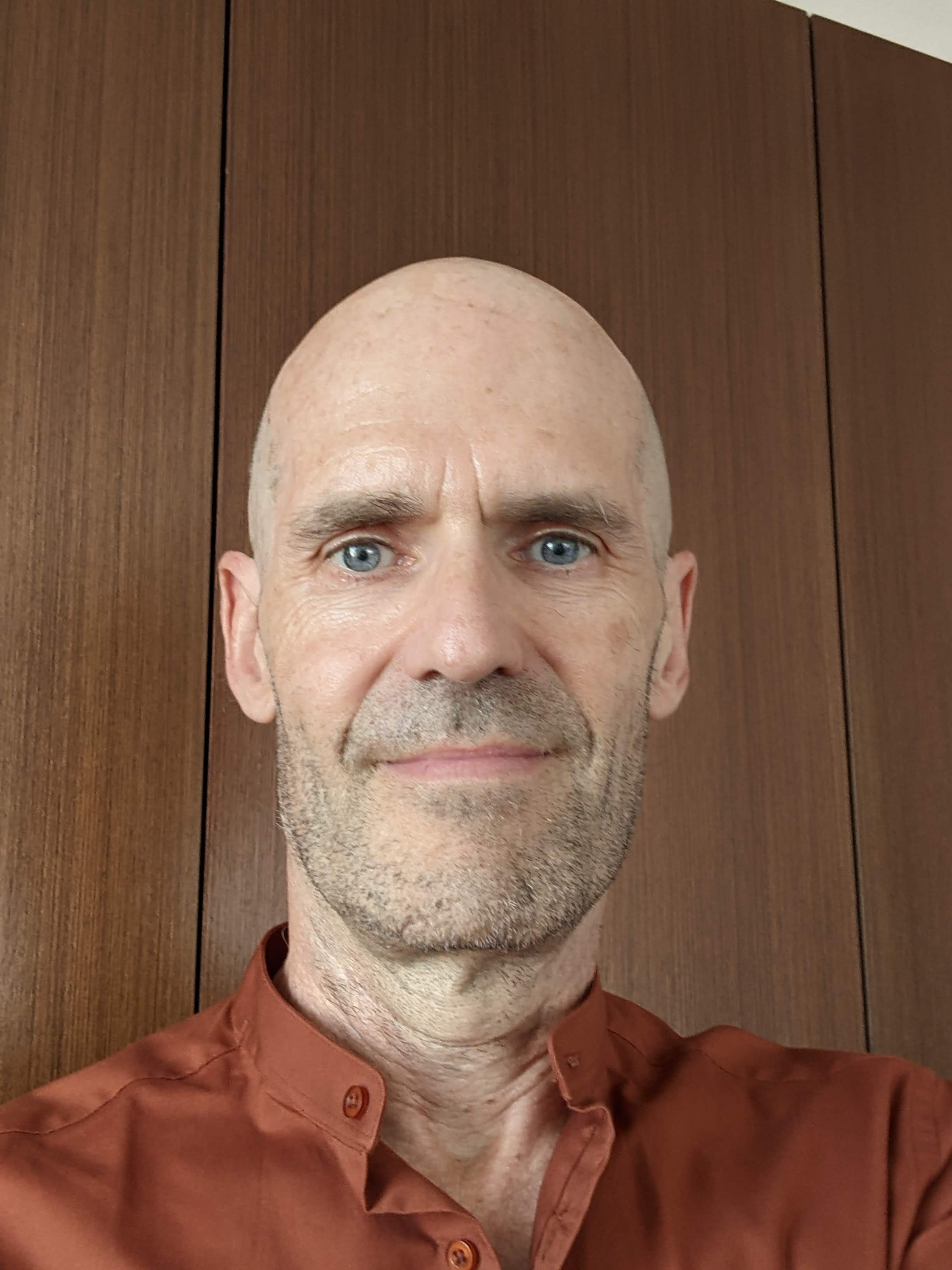 Dean P.
Foster studied AI at Rutgers University and statistics at the
University of Maryland before those fields converged into what is now
commonly known as machine learning. He previously served on the
faculty at the University of Chicago and the University of
Pennsylvania before joining Amazon in New York City in 2015 as a
Senior Principal Research Scientist. His research spans machine
learning, reinforcement learning, large language models, statistics,
and game theory. In game theory, he helped pioneer stochastic
evolutionary game dynamics and calibrated learning, developing
theoretical tools for proving convergence to equilibrium. His work on
calibrated learning and no-internal-regret algorithms was among the
earliest to establish convergence to correlated equilibrium and became
foundational in theoretical machine learning. In statistics, he is
widely known for contributions to large-scale regression problems,
including early work on risk inflation in high-dimensional settings
and the development of alpha-investing, which provides both a
theoretical framework for variable selection and a fast algorithm
suitable for streaming data. At Amazon, he founded a reinforcement
learning team responsible for large-scale inventory and logistics
optimization problems involving millions of products and hundreds of
warehouses through multi-agent reinforcement learning systems. More
recently, his work has focused on the use of large language models not
only for code generation but also for theorem proving and software
reasoning.
Dean P.
Foster studied AI at Rutgers University and statistics at the
University of Maryland before those fields converged into what is now
commonly known as machine learning. He previously served on the
faculty at the University of Chicago and the University of
Pennsylvania before joining Amazon in New York City in 2015 as a
Senior Principal Research Scientist. His research spans machine
learning, reinforcement learning, large language models, statistics,
and game theory. In game theory, he helped pioneer stochastic
evolutionary game dynamics and calibrated learning, developing
theoretical tools for proving convergence to equilibrium. His work on
calibrated learning and no-internal-regret algorithms was among the
earliest to establish convergence to correlated equilibrium and became
foundational in theoretical machine learning. In statistics, he is
widely known for contributions to large-scale regression problems,
including early work on risk inflation in high-dimensional settings
and the development of alpha-investing, which provides both a
theoretical framework for variable selection and a fast algorithm
suitable for streaming data. At Amazon, he founded a reinforcement
learning team responsible for large-scale inventory and logistics
optimization problems involving millions of products and hundreds of
warehouses through multi-agent reinforcement learning systems. More
recently, his work has focused on the use of large language models not
only for code generation but also for theorem proving and software
reasoning.
David Rosenberg, Head of Machine Learning Strategy, Bloomberg
Camilo Ortiz,Head of AI Finance Engineering, Bloomberg
Keynote Presentation: Bond Price Nowcasting: A Statistical Learning Problem Without a Natural Home
Abstract: Bond price nowcasting is easy to state: estimate the current price of a bond from noisy, irregularly-timed observations. But this problem does not fit neatly into any single statistical learning formulation, as bonds trade at frequencies that vary by orders of magnitude, observations are sparse and asynchronous, and reliable estimates for illiquid bonds require borrowing strength across a large and heterogeneous market.
In this talk, we use bond price nowcasting at Bloomberg as a case study in applied statistical learning, drawing on several years of work spanning state-space models and Kalman filtering, matrix factorization, gradient boosting, Gaussian processes, learned representations, neural models, and more recent work with time series foundation models and agentic systems. Rather than viewing these simply as competing algorithms, we examine them as different mechanisms for sharing information across time, bonds, observable characteristics, and learned notions of similarity. We close by considering where even these formulations leave important information on the table, particularly when effective pricing depends on richer metadata, expert-selected comparables, and domain knowledge, which are difficult to encode cleanly in a model.
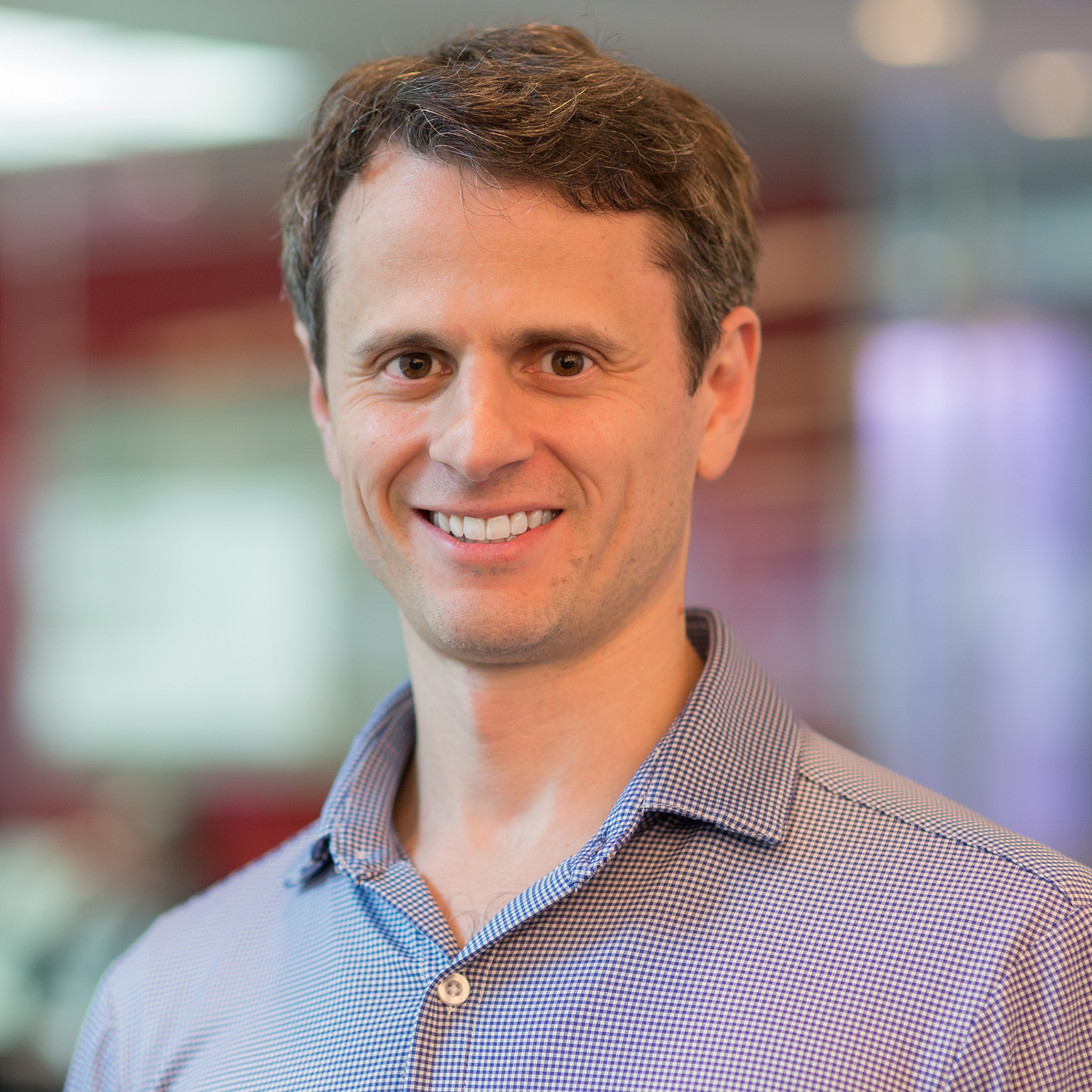 David
Rosenberg leads the Machine Learning Strategy team in the Office of
the CTO at Bloomberg. He was a co-author of the BloombergGPT research
paper, which explored what it would take to build a large language
model tailored to the financial domain. He was previously an adjunct
associate professor at NYU’s Center for Data Science, where he twice
received the “Professor of the Year” award. Before joining Bloomberg,
David served as Chief Scientist at Sense Networks, a location data
analytics and mobile advertising company, and he served as scientific
adviser to Discovereads, a book recommendation company first acquired
by Goodreads and later Amazon. He holds a Ph.D. in statistics from UC
Berkeley, an S.M. in applied mathematics from Harvard University, and
a B.S. in mathematics from Yale University. He is currently based in
Toronto.
David
Rosenberg leads the Machine Learning Strategy team in the Office of
the CTO at Bloomberg. He was a co-author of the BloombergGPT research
paper, which explored what it would take to build a large language
model tailored to the financial domain. He was previously an adjunct
associate professor at NYU’s Center for Data Science, where he twice
received the “Professor of the Year” award. Before joining Bloomberg,
David served as Chief Scientist at Sense Networks, a location data
analytics and mobile advertising company, and he served as scientific
adviser to Discovereads, a book recommendation company first acquired
by Goodreads and later Amazon. He holds a Ph.D. in statistics from UC
Berkeley, an S.M. in applied mathematics from Harvard University, and
a B.S. in mathematics from Yale University. He is currently based in
Toronto.
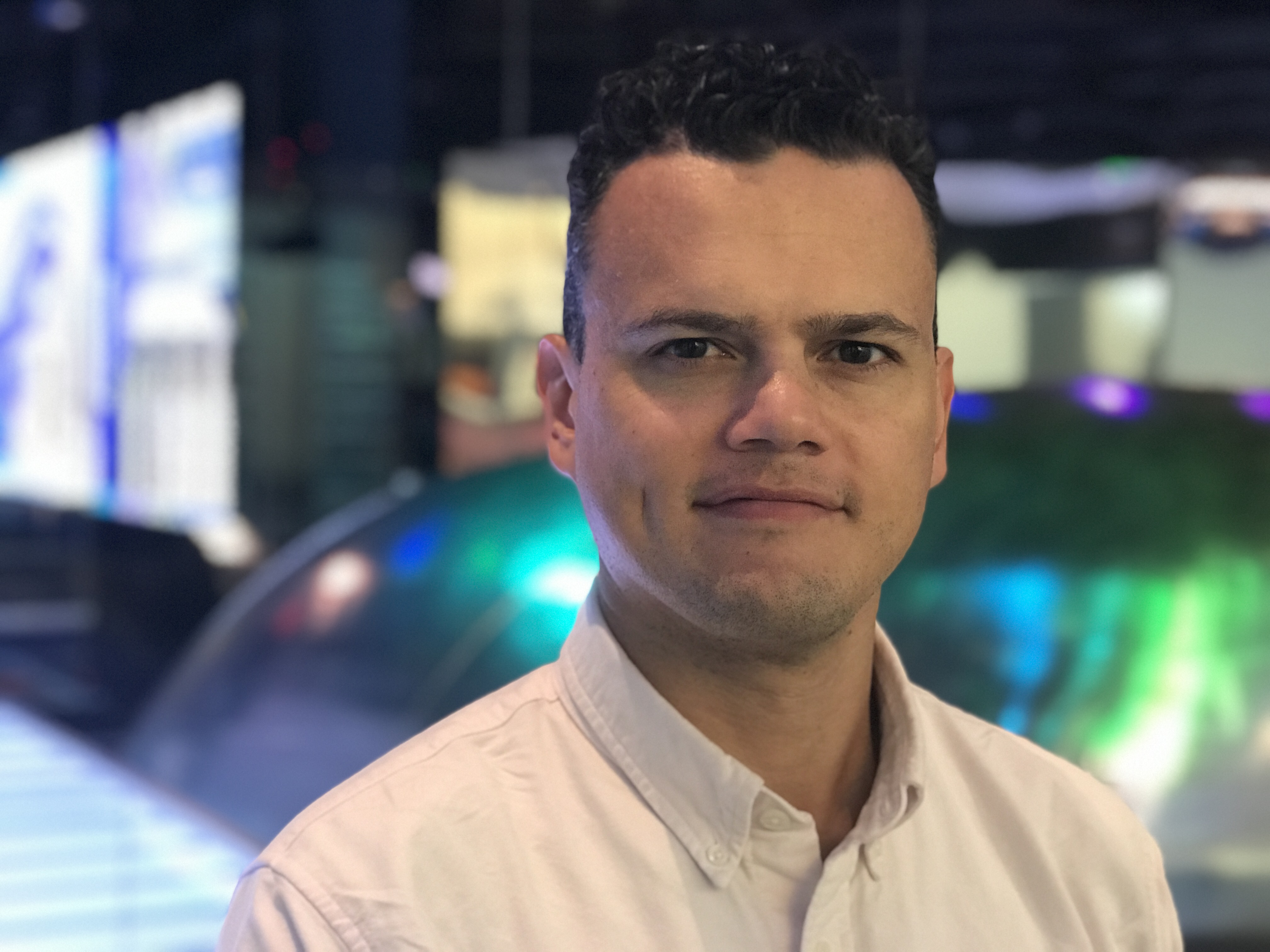 Camilo Ortiz
is Head of AI Finance Engineering at Bloomberg. In this role, he
manages all pricing-related efforts in Bloomberg’s AI Engineering
group. His team of machine learning and quant engineers applies
AI-driven techniques to provide high quality prices on a large
universe of bonds that perform well in the absence or presence of
recent observations, liquidity, or volatility, projections of public
company dividends, and greenhouse gas (GHG) emission estimates, as
well as AI models related to other sustainable finance solutions.
Since joining Bloomberg in 2014, Camilo has led several AI teams
focused on Communications, News, Editorial, and AI Platforms. Camilo
earned his Ph.D. working on large-scale convex optimization at Georgia
Tech, which he attended as a Fulbright Science & Technology
Awardee.
Camilo Ortiz
is Head of AI Finance Engineering at Bloomberg. In this role, he
manages all pricing-related efforts in Bloomberg’s AI Engineering
group. His team of machine learning and quant engineers applies
AI-driven techniques to provide high quality prices on a large
universe of bonds that perform well in the absence or presence of
recent observations, liquidity, or volatility, projections of public
company dividends, and greenhouse gas (GHG) emission estimates, as
well as AI models related to other sustainable finance solutions.
Since joining Bloomberg in 2014, Camilo has led several AI teams
focused on Communications, News, Editorial, and AI Platforms. Camilo
earned his Ph.D. working on large-scale convex optimization at Georgia
Tech, which he attended as a Fulbright Science & Technology
Awardee.
Bin Yu, Professor of Statistics, Electrical Engineering, and Computer Science, University of California, Berkeley
Keynote Presentation: Veridical Deep Learning: Evaluation and Compositionality
Abstract: Deep learning achieves remarkable predictive performance, yet trustworthiness demands more—reliable evaluation and interpretable structure. This talk presents two pillars of veridical deep learning grounded in the PCS (Predictability, Computability, Stability) framework. First, we address rigorous evaluation of LLMs beyond held-out accuracy by introducing Green Shielding, a user-centric research agenda for building evidence-backed deployment guidance by characterizing how benign input variation shifts LLM behavior. Second, we explore compositional interpretability: how deep models encode interactions among input features, illustrated through SPEX and related methods for extracting sparse, human-readable explanations.
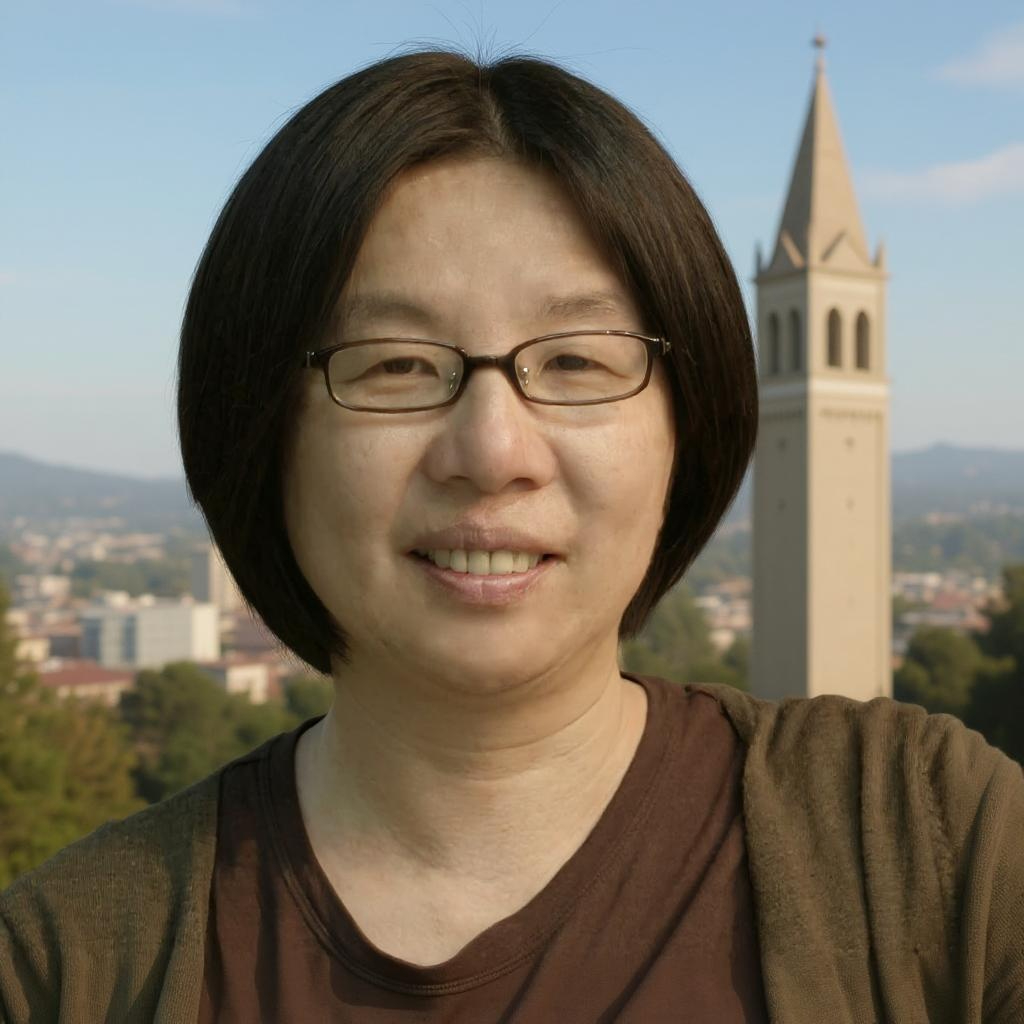 Bin Yu is
Chancellor’s Distinguished Professor in the Departments of Statistics
and Electrical Engineering and Computer Sciences at University of
California, Berkeley. A member of both the National Academy of
Sciences and the American Academy of Arts and Sciences, she is widely
recognized for pioneering the Predictability–Computability–Stability
(PCS) framework for veridical data science, which has become an
influential approach for transparent, reproducible, and trustworthy
data science and AI. Her group develops efficient and interpretable
ML/AI methods and theory, including influential contributions such as
iterative random forests (iRF), contextual decomposition for
transformers, adaptive wavelet distillation, and LoRA+ methods for
deep learning fine-tuning. Her research spans statistical theory,
interpretable machine learning, causal inference, and scientific
discovery, with applications in neuroscience, genomics, remote
sensing, and precision medicine through close interdisciplinary
collaborations with domain experts.
Bin Yu is
Chancellor’s Distinguished Professor in the Departments of Statistics
and Electrical Engineering and Computer Sciences at University of
California, Berkeley. A member of both the National Academy of
Sciences and the American Academy of Arts and Sciences, she is widely
recognized for pioneering the Predictability–Computability–Stability
(PCS) framework for veridical data science, which has become an
influential approach for transparent, reproducible, and trustworthy
data science and AI. Her group develops efficient and interpretable
ML/AI methods and theory, including influential contributions such as
iterative random forests (iRF), contextual decomposition for
transformers, adaptive wavelet distillation, and LoRA+ methods for
deep learning fine-tuning. Her research spans statistical theory,
interpretable machine learning, causal inference, and scientific
discovery, with applications in neuroscience, genomics, remote
sensing, and precision medicine through close interdisciplinary
collaborations with domain experts.
Professor Yu received her B.S. in Mathematics from Peking University and her M.S. and Ph.D. in Statistics from University of California, Berkeley. Her major honors include the COPSS Distinguished Achievement Award and Lectureship, the COPSS E. L. Scott Award, and a Guggenheim Fellowship. She has delivered many distinguished lectures, including the Breiman Lecture at NeurIPS, the Wald Memorial Lectures of the Institute of Mathematical Statistics, and the COPSS Distinguished Achievement Award and Lectureship at JSM. Professor Yu has also served in numerous leadership roles in the statistics and data science communities, including President of the IMS, Chair of the Berkeley Statistics Department, and advisory and editorial positions for leading scientific institutes and journals.
Tian Zheng, Professor of Statistics, Columbia University
Keynote Presentation: Statistical Thinking and AI Education
Abstract: As AI becomes more common in education and practice, statistical thinking remains essential. In my talk, I will discuss the importance of core ideas such as uncertainty, model validation, and data interpretation in AI education across disciplines. Integrating these concepts helps students move beyond using tools to understanding how and why models work. This approach supports more reliable, transparent, and responsible use of AI, and highlights the role of statisticians in shaping effective AI education.
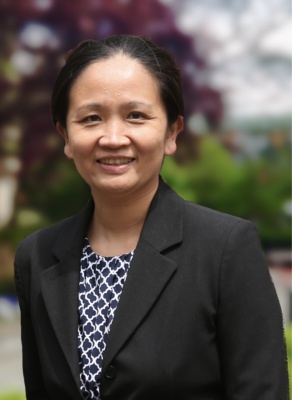 Dr. Tian Zheng
is Professor of Statistics at Columbia University. She obtained her
Ph.D. from Columbia in 2002. In her research, she develops novel
methods for exploring and understanding patterns in complex data from
different application domains such as biology, psychology,
climatology, etc. Her current projects are in the fields of
statistical machine learning, spatiotemporal modeling, and social
network analysis, collaborating with ecologists and earth scientists.
Professor Zheng’s research has been recognized by the 2008 Outstanding
Statistical Application Award from the American Statistical
Association (ASA), the Mitchell Prize from ISBA, and a Google research
award. She became a Fellow of the American Statistical Association in
2014. Professor Zheng is passionate about education and mentoring.
From 2015-2016, she was one of the series creators for Columbia’s edX
Massive Online Open Course (MOOC) series on data science. From
2017-2020, she was associate director for education of Columbia Data
Science Institute. She led a number of education programs, including
the MS in Data Science program at Columbia, data science capstone
projects with data ethics components, DSI Scholars program that
connects students with academic research projects in data science, the
Collaboratory program for interdisciplinary data science curriculum
development, a number of popular Data Science boot camps. She created
DSI’s working group on Data Science Education and has been
coordinating data science education efforts across Columbia. Professor
Zheng is the recipient of the 2017 Columbia’s Presidential Award for
Outstanding Teaching. In 2021, she was recognized by a Lenfest
Distinguished Columbia Faculty Award that recognizes the excellence of
faculty as teachers and mentors of both undergraduate and graduate
students.
Dr. Tian Zheng
is Professor of Statistics at Columbia University. She obtained her
Ph.D. from Columbia in 2002. In her research, she develops novel
methods for exploring and understanding patterns in complex data from
different application domains such as biology, psychology,
climatology, etc. Her current projects are in the fields of
statistical machine learning, spatiotemporal modeling, and social
network analysis, collaborating with ecologists and earth scientists.
Professor Zheng’s research has been recognized by the 2008 Outstanding
Statistical Application Award from the American Statistical
Association (ASA), the Mitchell Prize from ISBA, and a Google research
award. She became a Fellow of the American Statistical Association in
2014. Professor Zheng is passionate about education and mentoring.
From 2015-2016, she was one of the series creators for Columbia’s edX
Massive Online Open Course (MOOC) series on data science. From
2017-2020, she was associate director for education of Columbia Data
Science Institute. She led a number of education programs, including
the MS in Data Science program at Columbia, data science capstone
projects with data ethics components, DSI Scholars program that
connects students with academic research projects in data science, the
Collaboratory program for interdisciplinary data science curriculum
development, a number of popular Data Science boot camps. She created
DSI’s working group on Data Science Education and has been
coordinating data science education efforts across Columbia. Professor
Zheng is the recipient of the 2017 Columbia’s Presidential Award for
Outstanding Teaching. In 2021, she was recognized by a Lenfest
Distinguished Columbia Faculty Award that recognizes the excellence of
faculty as teachers and mentors of both undergraduate and graduate
students.